Getting the best out of people
Cybernetics for teams
At some point in time, you, like me, will find yourself in a room full of people you love collaborating with and start wondering things.
How can we keep this synergy going? What if all of us can’t commit the same? What kind of a leader would everyone be? I hope we all feel safe and empowered to bring our ideas to life
One way to answer these questions is to let teams work as a sociocracy. It’s a way to collaborate without hierarchies, where everyone’s voice is heard and decisions are made by consent.
Let me explain that with the example of a community garden :
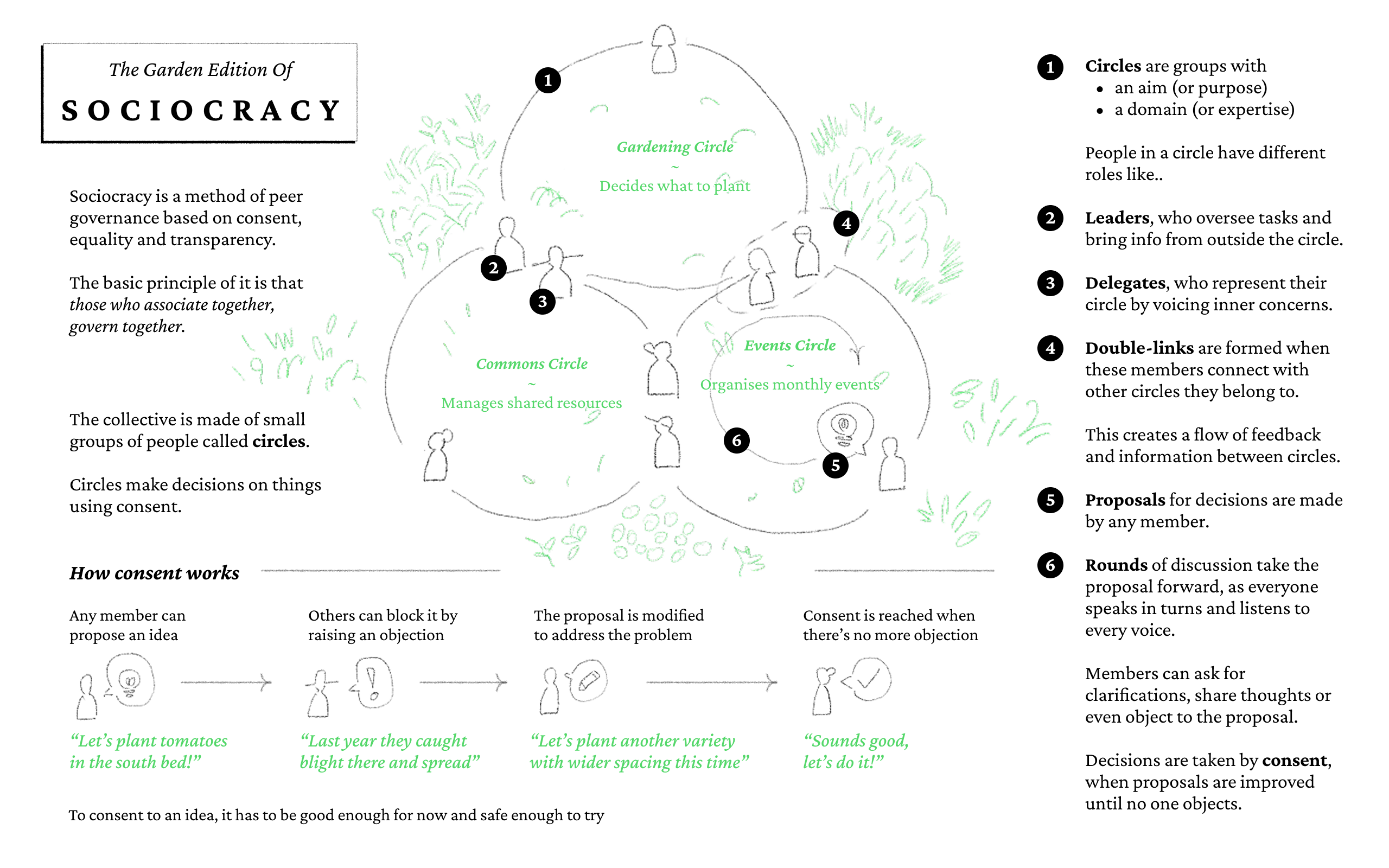
The special ingredient here – consent – has a bit of nuance. In traditional teams, we’re used to doing things by consensus (which is when everyone agrees) or voting (which is when majority wins). Or a team leader just calls the shots.
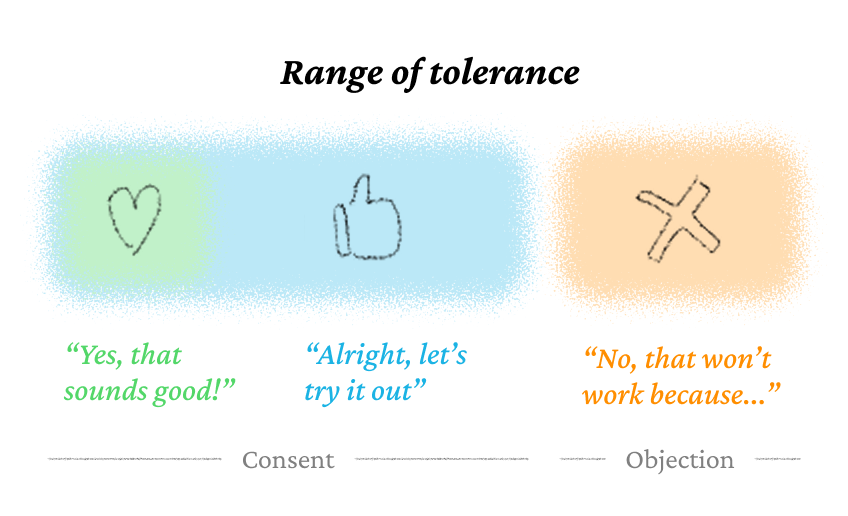
But consent doesn’t need everyone to agree. It just means you don’t object. It means you can live with the decision that’s being made even if you’re not on board. You trust the teammate to carry it out, and you only object when you think we can’t achieve our goals with the decision.
This is what’s called a range of tolerance for every decision. You can say ‘Yes’, ‘Alright’ or ‘No, because..‘. And when you say ‘No’, you can expect your voice to be heard, and the idea to be improved.
Teamwork can feel delicate and exhilarating at the same time. It’s a dance of genius, persistence, empathy and fatigue. You want to do cool things with the people around you, but you also want to do it right.
In the sociocratic way, decisions are iterative. Ideas are improved until nobody objects. Teams learn through conversation and feedback. Information is shared and everybody can lead with initiative. People are elected to roles by consent too. Everyone has a chance to feel safe, heard and empowered. Teams have a way to become resilient.
Additional reading :
- sociocracy and non-violent communication
- sociocracy and cybernetics